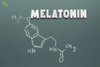
Your Body's Internal Clock: Understanding the Circadian Rhythm and Melatonin

What Is the Circadian Rhythm?
Every cell in your body keeps time. Not metaphorically — literally. The human body runs on a roughly 24-hour biological cycle called the circadian rhythm, a self-sustaining internal clock that governs when you sleep, when you wake, when hormones are released, when your core temperature peaks, and dozens of other physiological processes. Understanding how this system works — and the central role melatonin plays in it — reveals why timing is so fundamental to human health.
The word circadian comes from the Latin circa dies, meaning "about a day." Your circadian rhythm is an endogenous timing system — meaning it runs from within, independently of external cues — that has evolved over hundreds of millions of years to synchronise biological processes with the 24-hour cycle of the Earth's rotation.
In humans, the master clock of the circadian system is a tiny region of the brain called the suprachiasmatic nucleus (SCN), located in the hypothalamus directly above the optic chiasm. The SCN contains approximately 20,000 neurons, each capable of generating its own roughly 24-hour oscillation through a molecular feedback loop involving a set of "clock genes" — including CLOCK, BMAL1, PER, and CRY. These genes produce proteins that inhibit their own transcription, creating a cycle that turns on and off roughly every 24 hours.
The SCN coordinates timing signals throughout the body via neural pathways, the autonomic nervous system, and hormonal release. Peripheral tissues — in the liver, heart, lungs, skin, and elsewhere — also contain their own local clocks, which are kept in synchrony by signals from the SCN.
Light: The Primary Zeitgeber
An internal clock is only useful if it stays aligned with the outside world. The circadian system uses environmental cues called zeitgebers (from the German for "time-givers") to remain entrained to the actual 24-hour day. The most powerful of these is light.
The SCN receives direct input from the retina via a dedicated pathway: the retinohypothalamic tract. A specialised subset of retinal ganglion cells — intrinsically photosensitive retinal ganglion cells (ipRGCs) — contain the photopigment melanopsin, which is maximally sensitive to short-wavelength blue light (around 480 nm). These cells project directly to the SCN and provide it with real-time information about ambient light levels.
When light hits these cells in the morning, the SCN responds by suppressing melatonin synthesis, advancing the phase of the clock, and triggering the cascade of physiological changes associated with wakefulness. As light fades in the evening, the inhibition is released, and the system prepares for sleep.
Melatonin: The Hormone of Darkness
Melatonin is a hormone synthesised primarily by the pineal gland, a small endocrine structure situated at the geometric centre of the brain. Its production is regulated almost entirely by the SCN via a multi-synaptic pathway — from the SCN, through the paraventricular nucleus of the hypothalamus, down the spinal cord, through the superior cervical ganglion, and finally to the pineal gland.
The key signal controlling melatonin synthesis is darkness. When the SCN detects the absence of light, it sends noradrenergic signals to the pineal gland, which stimulate the synthesis of melatonin from its precursor serotonin. The pathway is:
Tryptophan → Serotonin → N-acetylserotonin → Melatonin
The final conversion step is catalysed by the enzyme hydroxyindole-O-methyltransferase (HIOMT), and its activity — and therefore melatonin output — is almost entirely suppressed by retinal light exposure.
In healthy adults with normal light exposure, melatonin levels remain low throughout the day (typically below 10 pg/mL in blood plasma), then begin rising in the evening roughly 2 hours before habitual sleep onset — a point known as dim-light melatonin onset (DLMO) — and peak in the middle of the night (typically between 1 am and 3 am), reaching concentrations of 100–200 pg/mL or higher. Levels then decline across the latter half of the night and are nearly undetectable by morning.
This nightly melatonin surge serves as the body's biochemical signal for darkness — a hormonal broadcast that communicates "it is night" to virtually every organ system in the body.
What Melatonin Does in the Body
Melatonin's influence extends well beyond the brain. It acts via two G-protein-coupled receptors — MT1 and MT2 — distributed throughout the body. MT1 receptors are primarily involved in the inhibition of neuronal firing and the acute sleepiness associated with melatonin. MT2 receptors are more associated with phase-shifting effects on the circadian clock itself.
Key physiological actions of endogenous melatonin include:
- Sleep initiation: Melatonin reduces core body temperature (by promoting peripheral vasodilation), lowers alertness, and promotes the transition into sleep. It does not force sleep — rather, it signals that conditions are appropriate for it.
- Phase regulation: Melatonin is critical for maintaining the correct phase relationship between the internal clock and the external day-night cycle. When the timing of melatonin secretion shifts, so does the timing of virtually all circadian rhythms.
- Reproductive seasonality: In many mammals, the duration of the nightly melatonin signal encodes daylength, allowing seasonal regulation of reproductive hormones. While humans are far less seasonally sensitive, the pathway is retained.
- Immune modulation: Melatonin receptors are present on immune cells, and the hormone appears to have an immunomodulatory role, with some studies suggesting effects on cytokine production.
- Antioxidant activity: Melatonin is a potent free-radical scavenger, and this function — independent of receptor binding — may contribute to cellular protection, particularly in the brain and retina.
The Circadian System Beyond Sleep
While the sleep-wake cycle is the most obvious expression of the circadian rhythm, the system governs an enormous range of physiological processes — many of which have significant health implications.
Core body temperature follows a circadian rhythm, peaking in the late afternoon (around 5–7 pm) and reaching its lowest point in the early morning hours (around 4–5 am). This temperature rhythm is tightly coupled to sleep propensity.
Cortisol surges sharply in the hour following waking — the cortisol awakening response — as part of the body's preparation for the metabolic demands of the day. Cortisol levels then fall gradually throughout the day, reaching a nadir around midnight.
Cardiovascular function is circadian-regulated. Blood pressure follows a characteristic pattern, rising sharply in the early morning hours (a period associated with elevated risk of adverse cardiovascular events), peaking in the afternoon, and dipping during sleep.
Metabolism is profoundly influenced by timing. Glucose tolerance, insulin sensitivity, and gastrointestinal motility all follow circadian patterns. The liver's metabolic clock — normally entrained by the SCN and feeding signals — coordinates the timing of gluconeogenesis, lipid synthesis, and detoxification pathways.
Immune function is circadian-gated. The timing of inflammatory responses, T-cell activity, and the expression of immune effectors follows a daily rhythm. This has practical implications for the timing of vaccinations, surgeries, and the progression of certain inflammatory diseases.
What Disrupts the Circadian System?
The circadian system evolved to operate in an environment characterised by bright days and dark nights. Modern life presents a range of challenges to this assumption.
Artificial light at night is the most significant disruptor. Light exposure after sunset — particularly from screens and LED lighting — activates the ipRGCs and signals the SCN to suppress melatonin and advance alertness, effectively tricking the brain into believing it is still daytime. Even relatively low light intensities (as little as 8–10 lux) can measurably suppress melatonin in some individuals under certain conditions.
Shift work and irregular schedules force the body to be active during its biological night, creating a misalignment between the internal clock and social/occupational demands — a state sometimes called social jetlag.
Transmeridian travel (jetlag) abruptly shifts the zeitgebers without shifting the internal clock, producing a temporary misalignment that resolves over several days as the clock re-entrains to the new light-dark cycle.
Ageing affects the circadian system in several ways: the amplitude of rhythms generally decreases, melatonin secretion declines (with some studies showing significantly lower peak nocturnal levels in older adults), and the system often shifts to an earlier phase.
The Significance of Circadian Alignment
Research over the past two decades has made clear that circadian misalignment — a state in which the body's internal timing is out of sync with its environment or behavioural schedule — is associated with a broad range of adverse health outcomes. These include metabolic dysfunction, obesity, type 2 diabetes, cardiovascular disease, mood disorders, impaired cognitive function, and increased susceptibility to certain cancers.
This body of evidence has led to the emergence of chronobiology as a distinct and growing field of medicine, and to the concept of chronotherapy: matching the timing of medical interventions to the body's natural biological rhythms to improve efficacy and reduce side effects.
Summary
The circadian rhythm is one of the most fundamental organising principles in human biology — a 24-hour master programme that coordinates virtually every aspect of physiology. Melatonin is its primary hormonal messenger: produced by the pineal gland in response to darkness, released every night to signal that the biological day is over, and suppressed each morning by light to initiate the waking cycle. Together, these systems ensure that the right biological processes happen at the right times — and the evidence increasingly shows that maintaining this alignment is as important to long-term health as diet, exercise, or any other lifestyle factor.
This article is intended for educational purposes and provides general information about human biology. It does not constitute medical advice.
- Patrick McGreevy